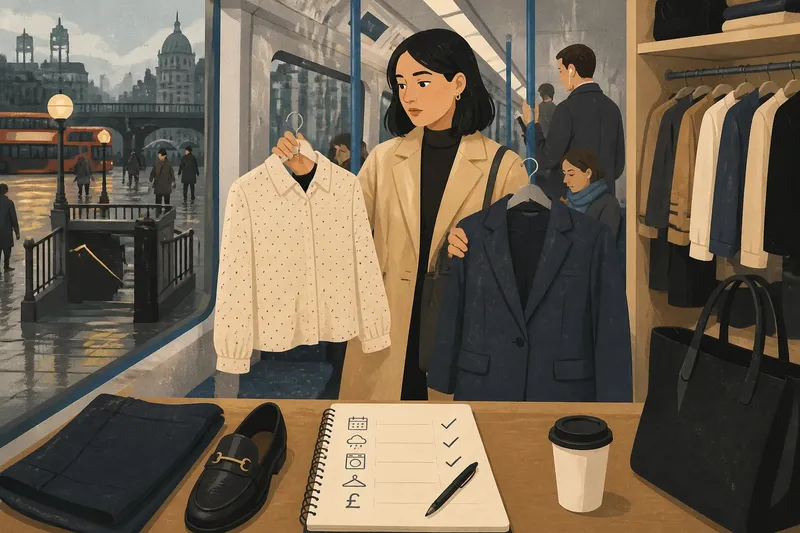
Hanging or Folding: Give Each Garment Its Place
Hanging or folding clothes well keeps garments easier to find and helps them hold their shape, even when a city wardrobe has limited rail and shelf space.

The common mistake with hanging or folding clothes is giving every garment the same treatment: the rail becomes crowded, shelves turn into leaning towers, and shoulders or creases pay for the convenience. A useful storage spot depends on a garment’s shape, the space available and how often you reach for it.
Think of a wardrobe as a small filing system, not a display. The aim is to store each item so it stays in reasonable shape and is easy to retrieve without disturbing its neighbours.
1. Hang garments that rely on their shape
Structured jackets, blazers and many coats usually do better on hangers. Their shoulders and lapels are designed to sit in a particular outline; folding them can leave hard creases or press one part of the garment against another.
Choose a hanger broad enough to support the shoulder area, with a shape that follows the garment rather than digging into it. A slim wire hanger may save rail space, but it can leave marks or let a jacket slump. Keep enough room between pieces that sleeves are not permanently trapped in a crush.
For a city wardrobe, the coat or jacket worn most often belongs where it can be reached without shifting the rest. Less-used formal outerwear can go farther along the rail, provided it remains supported and is not forced against a wall.
Give structured shoulders a hanger that supports them from seam to seam.
2. Fold knits that can stretch under their own weight
Jumpers, cardigans and other soft knits are often better folded. Hanging a heavy knit from its shoulders can pull the fabric downward and leave pointed bumps where the hanger meets the garment. Folding spreads its weight across a shelf or drawer instead.
Fold knitwear loosely, with sleeves tucked in and the body resting flat. Avoid pressing a stack so tightly that the lower pieces become difficult to remove. If a jumper is worn often, place it near the top of the pile or in a drawer where it can be lifted out without dragging across other clothes.
Some lightweight knits may hang acceptably on a broad, padded hanger, but that does not make a narrow hanger a good choice. When in doubt, folding is the gentler default for a garment that feels heavy in the hand or has a soft, yielding shoulder.
If the shoulders look stretched after storage, move that knit to a shelf.
3. Let fabric and construction settle the borderline cases
Shirts, trousers, skirts and dresses do not all have one correct storage method. A crisp shirt that wrinkles easily may be simpler to hang; a casual shirt made from a relaxed fabric can fold neatly. Trousers with a sharp crease may hang from a trouser hanger, while softer everyday pairs can sit folded in a drawer.
Pay attention to seams, waistbands, pleats and decorative details. A skirt with a firm waistband and a hanging loop may sit well on clips, but clips should not bite into delicate fabric. A dress with a bias-cut or easily distorted section may need a broad hanger and room to hang freely, while a sturdy cotton dress can be folded if the rail is full.
Imagine you have a linen shirt, a soft wool jumper and a pair of straight-leg trousers competing for one spare shelf. You could hang the shirt to keep its collar and front easier to straighten, fold the jumper to protect its shoulders, and fold the trousers if a crease is not part of their intended look. The result is a shelf for garments suited to shelves, rather than a random overflow zone.
Storage choices can depend on the care label and the garment maker’s instructions, so check those when a material or construction is unfamiliar.
4. Match storage to the space you actually have
A long rail is useful for coats, dresses and garments that need to hang without touching the floor. A short rail can take shirts and jackets, with folded knitwear on shelves above or below. If the wardrobe has little hanging room, reserve it for pieces that crease, distort or become awkward to fold.
Use shelves for stacks that can be lifted out cleanly. A deep shelf may tempt you to make a large pile, but garments at the bottom can disappear from view. Two smaller stacks are usually easier to manage than one broad mound. Drawer dividers or simple boxes can keep socks, scarves and other small pieces from spreading into the space meant for clothes.
Do not treat the back of a chair as extra storage. It is an excellent way to make a garment unavailable while still technically keeping it in the room.
Give the most useful shelf to clothes you can remove without dismantling the stack.
5. Put frequent wear within easy reach
Storage order should follow use as well as garment type. A work shirt worn repeatedly during the week is more practical at the front of a rail than at the far end behind occasion clothes. The same principle applies to a favourite pair of trousers or a cardigan kept for cold platforms and draughty offices.
Keep frequent-use items in the part of the wardrobe you can reach comfortably, and place occasional pieces higher, lower or farther back. This does not require a strict rotation system. It simply reduces the number of garments you must move to reach the one you want.
If you often wear a garment before it has fully aired, give it a separate place from clean clothes rather than returning it directly to a crowded rail or drawer. A hook or a little breathing room can keep it from being mistaken for a freshly laundered item. The point is separation, not an elaborate ritual.
Store the clothes you reach for most where reaching for them is easiest.
6. Choose a hanger or fold that does not create new problems
Hangers should suit the garment. Broad, shaped hangers support jackets and coats; smooth, non-slip hangers can help lighter shirts stay put; trouser hangers are useful when a crease or full length matters. Avoid forcing several garments onto one hanger, since the compressed layers are harder to see and may crease each other.
For folded clothes, make stacks shallow enough to keep their contents visible. Fold along natural seams where possible, and do not use an elastic band or a tight clip to hold a garment in a way that could leave marks. If a drawer is packed so tightly that clothes spring out when opened, it is storing more than it can manage comfortably.
For a garment that can reasonably be either hung or folded, choose the method that leaves it accessible without bending or compressing it awkwardly. The best theoretical method is not much help if the available shelf is too cramped to use it.
How should you store common wardrobe pieces?
Should T-shirts be hung or folded?
Most everyday T-shirts fold easily and take little space in a drawer or on a shelf. Hanging can work for a shirt that wrinkles readily, but use a hanger that does not stretch the neckline or shoulders.
Should jeans be hung or folded?
Jeans are generally easy to fold and store in a drawer or on a shelf. Hang them if you prefer them visible or need to preserve a particular pressed line, but avoid letting a crowded rail squash them against lighter garments.
Should dresses be hung or folded?
Hang dresses that crease easily, have a defined shape or need room for their skirt to fall freely. Fold a sturdy, casual dress if rail space is limited, keeping bulky seams and trims from pressing hard into the fabric.
Where should scarves go?
Fold scarves in a drawer or place them loosely in a shallow box so they remain easy to see. A smooth hook can suit a scarf used often, but a pile of several scarves on one narrow hook is likely to become a knot with ambitions.
Use a brief storage check before putting clothes away
- Check the shoulders. If a garment is structured or its shoulders are soft and weight-bearing, choose a supportive hanger or a flat shelf as appropriate.
- Check the fabric’s weight. If a knit feels heavy or stretchy, fold it rather than leaving its weight suspended from the shoulders.
- Check for a crease or shape that matters. If a garment needs a crisp line or an uncompressed drape, reserve suitable rail space for it.
- Check the available room. If a hanger would press one garment against several others, fold a suitable piece or move less-used clothes elsewhere.
- Check how often you wear it. If you reach for it regularly, put it at a comfortable height and near the front of its storage area.
- Check whether it will be easy to remove. If taking one item pulls out the stack or tangles the rail, change the arrangement rather than blaming the garment.
Hanging or folding works best as a decision made garment by garment, not a rule applied to the whole wardrobe. Let shape determine support, let the available space set the limits, and keep frequent-use clothes within easy reach. A wardrobe arranged that way is less likely to demand a small excavation before the morning commute.