A Commute-to-Evening Outfit, Planned Around One Change
Plan a commute-to-evening outfit around one compact change, so your daytime clothes feel considered at dinner without carrying a second look.
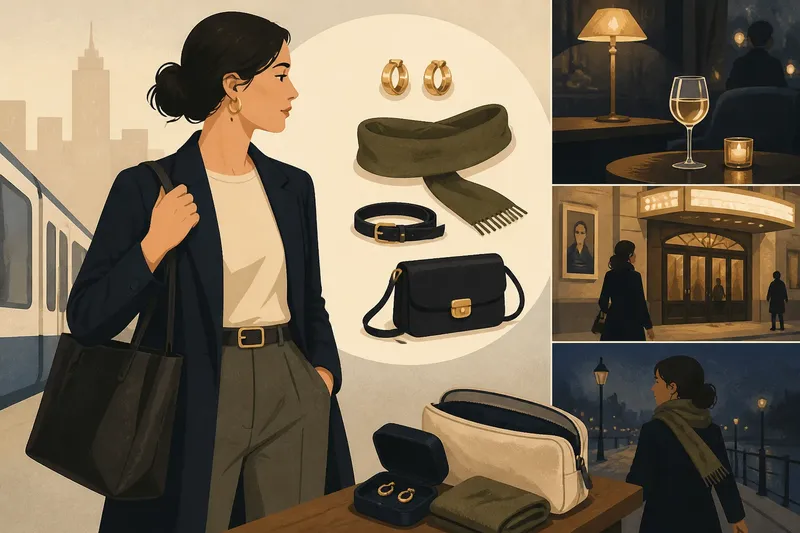
The common mistake with a commute-to-evening outfit is packing a second outfit, then discovering the evening plan only called for a different signal. The spare shirt, shoes and clutch take up room all day; one well-chosen accessory or layer can do the job with less baggage.
Start with the evening setting, not an imaginary transformation. A drink at a hotel bar, a small theatre and dinner at a relaxed restaurant call for different degrees of polish, but none necessarily demands a full change. The aim is to make your workday clothes look deliberate in both settings.
Choose the evening cue before choosing the outfit
Make a quick note of the commitment: indoors or outdoors, seated or standing, and whether you will check a coat, walk between venues or travel straight home. Those details help identify the useful change: a scarf, earrings, a belt, a more structured bag or a light layer.
For an evening in a warm, softly lit room, small metal earrings may register more clearly than a change of top. For a breezy terrace, a fine wool wrap or compact jacket has a job beyond looking different. A long walk through rain is a poor setting for delicate shoes, however persuasive the mirror may be.
Keep the plan tied to one visible decision. If the change requires a new bra, a different base layer and a bathroom with reliable hooks, it has quietly become an outfit change with a misleadingly modest name.
A commute-to-evening outfit starts with a quiet base
Choose daytime pieces that already suit the evening’s level of formality. Straight-leg trousers with a neat knit, a shirt dress with opaque tights, or a dark skirt with a simple blouse can move between an office and a casual restaurant without demanding rescue.
Fabric and finish matter more than a dramatic silhouette shift. A cotton shirt that creases at the elbows may still look fine after a day, while a clingy jersey top can show every fold from a crowded train seat. Check the outfit in ordinary daylight, then sit, reach and walk in it before deciding that it is ready for both parts of the day.
Colour can do some quiet work. A restrained base in navy, charcoal, cream or olive gives a brighter accessory somewhere to land; it also makes a patterned scarf or polished earring look intentional rather than like an item rescued from the bottom of a tote.
Keep the shoes honest. If the evening involves standing, commuting in the shoes you plan to wear is more useful than carrying heels that make the outfit look sharper for the length of one photograph.
Give the single change a clear job
One change works when it alters the outfit’s reading, solves a practical problem, or both. It should not be a decorative extra that needs its own supporting cast.
- Restaurant after work: Check that small earrings suit the neckline and will stay secure. If they do, carry them in a hard case and add them before dinner; if not, choose a scarf or leave the outfit unchanged.
- Chilly gallery or late walk: Check the forecast and whether your coat already provides enough warmth. If it does not, pack a fine merino wrap that relates to the outfit; if it does, skip the extra layer and keep the tote lighter.
- Casual client event: Check that a compact structured crossbody holds your essentials and works with your coat. If it does, use it instead of the day bag; if it does not, keep the practical work bag rather than carrying two.
- Loose shirt or dress: Check that the garment sits comfortably both with and without a slim belt. If the belt defines the line without restricting you when seated, pack it; if it pulls or bunches, leave it out.
- Outdoor evening: Check whether your daytime coat already suits the weather and the outfit. If it does not, bring a light jacket that works with both; if it does, do not carry a second layer for appearance alone.
- Long walk between venues: Check that your planned shoes are comfortable on the route and stable on the likely surface. If they are, wear them all day; if they are not, choose a comfortable polished pair rather than packing delicate shoes for a brief visual effect.
A useful accessory survives the commute in a small pouch or pocket and can be put on without a private dressing room. If it needs careful steaming, a special clasp or an elaborate knot, leave it for an evening that begins at home.
Keep the plan compact enough to carry
Think about the container as well as the change. A cloth pouch protects earrings from keys, a glasses case can hold a delicate brooch, and a scarf can be folded around itself in a tote. Loose metal pieces at the bottom of a bag are an efficient way to make a small accessory sound like plumbing.
Make room by removing something the evening does not need, rather than adding a second bag by default. A work tote with a small inner pouch is often less conspicuous than arriving at dinner with a gym sack, a laptop case and a purse that has become an auxiliary building.
Check the weather and the route before leaving. If your accessory is a wrap, it should suit the forecast and the coat you already need; if it is a bag, make sure its strap does not catch on your coat sleeve. Choose a change you can still use comfortably when the train is crowded and the pavement is wet.
Make one change without turning it into a costume
Can the same outfit work for an office and dinner?
Yes, if the office outfit already suits the dinner venue and remains comfortable after a full day. A neat base and one purposeful accessory usually look more credible than a dramatic change made in a restaurant washroom.
Should I change shoes for the evening?
Only if the alternative is easy to carry and the evening calls for it. If the route includes walking or standing, a clean, polished pair worn all day may be more useful than fragile shoes packed for appearance alone.
What is the easiest accessory to pack?
Small earrings, a slim belt or a lightweight scarf are compact options, but the right choice depends on the clothes and setting. Choose the item that changes one visible detail without needing another garment to make sense.
How do I keep a change from looking too formal?
Match its finish to the venue rather than choosing the most conspicuous item you own. A matte leather bag or modest metal jewellery can add definition without making a casual dinner look like a ceremony.
Try the plan before the day gets crowded
Lay out the full daytime outfit with the single change beside it. Look at the combination in a mirror, then remove the accessory and check that the base still works; if it only looks right after the change, the plan is asking one item to do too much.
Say you have a navy knit, charcoal trousers and comfortable loafers for the office, followed by dinner at a quiet neighbourhood restaurant. You choose small gold hoops, check that they suit the knit’s neckline, and put them in a fabric pouch beside your keys. Before leaving work, you add them and leave the rest of the outfit alone; the expected result is a more finished frame around your face, without extra shoes or a second bag.
For a commute-to-evening outfit, the useful change is the one that answers the actual plan while the clothes underneath remain comfortable enough for the journey, the workday and the table. Keep the pouch beside your keys, and the evening decision has one less chance to become a search through the bottom of a tote.